SIGNS OF A FAILING BATTERY: THE COMPLETE DIAGNOSTIC & REPLACEMENT GUIDE
Introduction
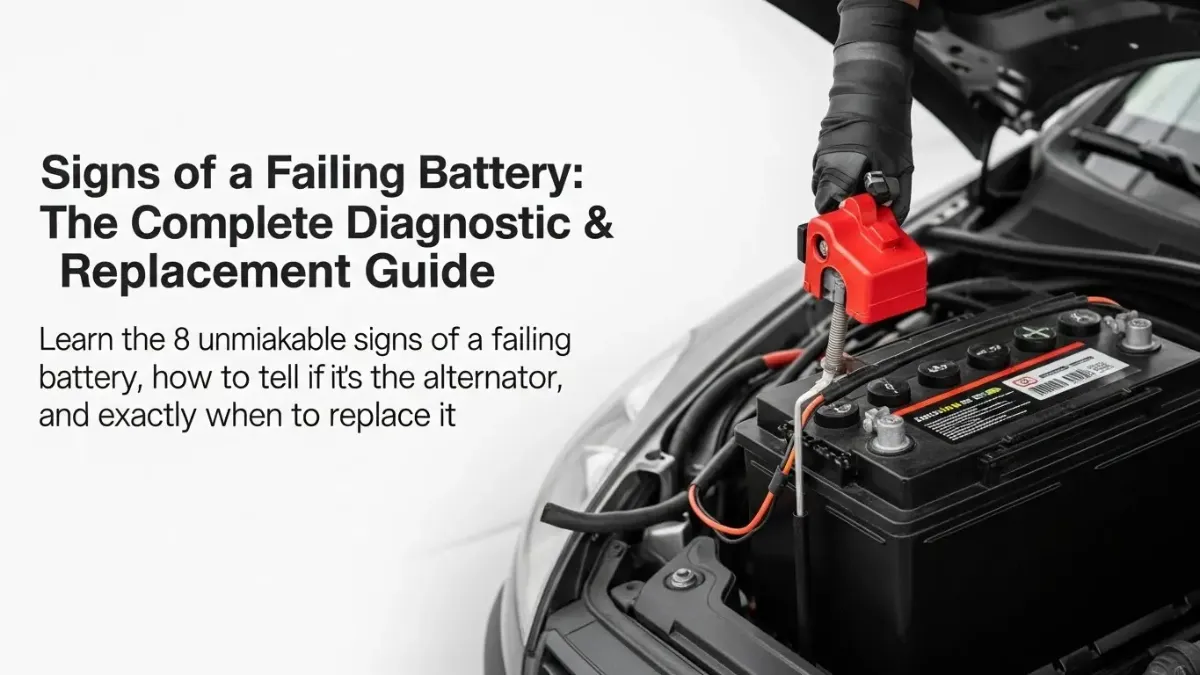
Your car battery is the heart of your vehicle’s electrical system. It powers the starter motor to turn over the engine, runs your accessories when the engine is off, and stabilizes the voltage to keep your electronics running smoothly. Yet, despite its importance, a battery is often the most overlooked component until it fails.
Most drivers don't realize their battery is dying until they are stranded in a parking lot. While a typical lead-acid or AGM battery lasts between 3 and 5 years[1], extreme temperatures, driving habits, and parasitic drains can shorten that lifespan significantly.
Recognizing the early warning signs of a failing battery not only saves you from the inconvenience of a breakdown but also prevents potential damage to your vehicle’s alternator and starter motor. This guide covers every symptom you need to know, explains the science behind them, and helps you differentiate a battery issue from an alternator problem.
How a Car Battery Works (The Basics)
To understand the symptoms, it helps to understand the mechanics. A standard 12-volt car battery is a storage device containing six cells, each generating about 2.1 volts. Inside these cells are lead dioxide plates and sponge lead plates submerged in an electrolyte solution (a mixture of sulfuric acid and water).
- Discharging: When you start the car, the chemical reaction converts sulfuric acid into lead sulfate, releasing electrons (electricity).
- Charging: The alternator reverses this process, converting the lead sulfate back into sulfuric acid and recharging the battery.
When a battery fails, it is usually due to sulfation (crystals building up on the plates) or physical degradation of the internal plates, preventing them from holding a charge.
8 Unmistakable Signs Your Car Battery Is Failing
Competitors often list 4 or 5 signs, but a failing battery can manifest in various ways. Here is the comprehensive list of symptoms you need to watch for.
- Slow Engine Crank
The most common and unmistakable sign is a sluggish start. When you turn the key or push the start button, the engine cranks slowly—rrr-rrr-rrr—rather than the energetic vroom-vroom you are used to.
Why it happens: The battery does not have enough Cold Cranking Amps (CCA) to turn over the heavy engine. This is often worse in cold weather because low temperatures thicken engine oil and slow down the chemical reaction inside the battery[2].
What to do: Do not ignore this. Have the battery load-tested immediately. If it fails the test, replace it before it leaves you stranded.
- Dim or Flickering Headlights and Electronics
If your headlights seem dim at idle but brighten when you rev the engine, or if your dashboard lights flicker, your battery is struggling to maintain consistent voltage.
Why it happens: A weak battery cannot provide stable amperage. Modern cars are packed with electronics (ECUs, infotainment, power windows) that require a steady 12V. A failing battery causes voltage dips, resulting in dimming lights or slow-moving power windows[3].
The Alternator Test: If lights brighten significantly when you rev the engine, it suggests the alternator is working, but the battery isn't holding the charge.
- Dashboard Warning Light
Most modern vehicles have a dashboard light that looks like a battery (sometimes with a plus and minus sign). This is technically the "Charging System Warning Light."
Why it happens: This light illuminates when the computer detects a voltage drop below normal range (usually below 12.4V) or a surge above normal range (above 14.4V). While it often indicates a dying battery, it can also point to a failing alternator or loose serpentine belt[4].
What to do: Check the battery terminals first. If they are clean and tight, get the electrical system diagnosed.
- Clicking Sound When Turning the Key
You turn the key, and hear a rapid click-click-click, but the engine won't turn over.
Why it happens: This is the sound of the starter solenoid trying to engage but failing because there isn't enough current to move the starter motor. It indicates the battery has enough power to activate the solenoid but not enough to crank the engine[5].
- Corrosion or "White Dust" on Terminals
Pop the hood and look at the battery terminals (positive and negative posts). Do you see a white, blue, or greenish powdery buildup?
Why it happens: This is corrosion caused by chemical reactions from hydrogen gas released by the battery acid mixing with the metal terminals.
The Risk: While minor corrosion can be cleaned, heavy buildup increases electrical resistance. This can prevent the car from starting because the current cannot flow from the battery to the starter, mimicking a dead battery.
- Swollen or Bloated Battery Case
Look at the sides of the plastic battery casing. Is it bulging, warped, or swollen?
Why it happens: This is a critical safety warning. Swelling usually occurs due to excessive heat or overcharging. The heat causes the internal liquid to expand and the case to deform. This is common in extremely hot climates (like Florida) or if the voltage regulator fails[6].
What to do: Do not wait. A swollen battery can explode. It must be replaced immediately.
- Unusual Smells (Rotten Eggs)
If you pop the hood and smell something like rotten eggs or sulfur, it is not a good sign.
Why it happens: A leaking battery can release sulfuric acid, which carries that distinct sulfur smell. Alternatively, if the battery is being overcharged by a faulty alternator, it may vent hydrogen sulfide gas.
What to do: If you smell sulfur, inspect the battery for leaks or cracks. Handle with gloves and eye protection, as battery acid is highly corrosive.
- Old Age
Even if your battery starts fine, age is a major factor. Check the date stamp on the battery (usually a sticker with a letter for the month and a number for the year, e.g., "D3" = April 2023).
The Rule of Thumb: If your battery is over 3 years old, it is living on borrowed time. At 4-5 years, you are on borrowed time. Proactive replacement is cheaper than a tow truck.
Differentiating Battery vs. Alternator vs. Starter Issues
One of the biggest gaps in competitor articles is explaining the difference between these three components. A dead battery might be a symptom of a bad alternator, not the root cause.
| Symptom | Likely Battery Issue | Likely Alternator Issue | Likely Starter Issue |
|---|---|---|---|
| Lights | Dim at idle, don't brighten when revving. | Very bright or dim randomly; flicker significantly. | Lights may stay normal, but engine won't crank. |
| Start | Slow crank or rapid clicking. | Car starts with a jump, but dies shortly after. | Single loud clunk or grinding noise (no clicks). |
| Driving | Car drives fine until you turn it off. | Car stalls while driving; electronics fail. | Engine doesn't turn over at all. |
The "Jump Start" Test: If the car starts with a jump start and keeps running, the battery is likely dead, and the alternator is charging it. If the car starts with a jump but dies immediately once the jumper cables are removed, your alternator is likely failing and not recharging the battery[7].
What To Do When You Notice These Signs
- Perform a Visual Inspection: Check the terminals for corrosion. If there is white buildup, clean it with a mixture of baking soda and water (using a wire brush) and tighten the clamps.
- Check the Voltage (The Multimeter Test): You can do this at home with a simple multimeter.
- Engine Off: Touch red probe to positive (+), black to negative (-). A healthy battery should read 12.4V to 12.7V. Anything below 12.2V is discharged.
- Engine On: With the engine running, it should read 13.7V to 14.7V. If it reads 12.6V while running, the alternator is not charging.
- Professional Load Test: A battery can show 12.5V but still be dead if it can't handle the "load" of starting a car. Visit a professional shop for a conductance test. This measures the battery's ability to deliver current in seconds.
Preventive Maintenance & Battery Life Extension
- Keep it Clean: Clean terminals periodically to prevent resistance.
- Short Trips are the Enemy: If you only drive 5-10 minutes, the alternator doesn't have enough time to fully recharge the battery. Occasionally take the car on a longer drive (30+ mins) or use a battery maintainer/trickle charger.
- Climate Control: Extreme heat kills batteries faster than cold. If you live in a hot climate, check your battery every 6 months after year 3. In cold climates, ensure your battery has high Cold Cranking Amps (CCA).
- Parasitic Drains: Ensure no lights (interior or trunk) are left on. Aftermarket accessories (alarms, stereos) can also drain batteries if the car sits for weeks.
FAQs: Common Battery Questions
Can a bad battery cause engine misfires or backfiring?
Yes. Weak voltage can cause the fuel pump and ignition system to malfunction, leading to lean fuel mixtures or incomplete combustion, which may cause backfiring[8].
Do I need to replace my battery with the exact same brand?
No. You need to replace it with the same group size (physical fit) and type (AGM vs. Flooded). Consult your owner’s manual for specifications.
Is it safe to jump-start a modern car?
Yes, but you must follow the correct procedure: connect positive to positive, negative to negative (or negative to a ground point on the engine block). Note: Modern vehicles with Start-Stop technology often require AGM batteries and specific reprogramming procedures via a scan tool after replacement.
Conclusion & Why Trust Us
Your car battery is a component you cannot afford to ignore. By recognizing the signs of a failing battery—slow cranking, dim lights, corrosion, or age—you can replace it on your schedule, not the tow truck’s.
Unlike generic online articles, we believe in transparency. Our diagnostic process includes checking the entire charging system (Battery, Alternator, and Starter) to ensure you aren't replacing a battery that is actually being killed by a bad alternator.
Book Appointment for a complimentary battery and charging system check today.
OTHER ARTICLES

Toyota C-HR Hybrid Price in Bangladesh 2025 | Year-Wise Price, Mileage & Features
Reconditioned vs. New Cars in Bangladesh(2025) – Which One Should You Buy?

Toyota Esquire Price in Bangladesh 2025-26 | Full Specs and Model Updates
What Causes Engine Knock & How to Prevent It | Biswas Automobiles